Guangzhou, China
Import and Export Commodity Trading Exhibition Hall Zone B
Date: November 18-20, 2026


When the Chinese team's uniforms for the 2026 Milan Winter Olympics were unveiled on the field, the precise and delicate patterns on the fabric, as well as the uniform and full colors, not only demonstrated the confidence of Chinese design, but also concealed an industrial revolution of deep integration of digital printing and AI technology. The words of Xiao Xingshui, General Manager of Shaoxing Qianyong Textile, "It is AI that has fulfilled my long cherished dream," express the voice of countless digital printing practitioners - the traditional printing industry, which once relied on experience and was constrained by technological bottlenecks, is now undergoing a magnificent transformation from "manufacturing" to "intelligent manufacturing" with the support of AI.
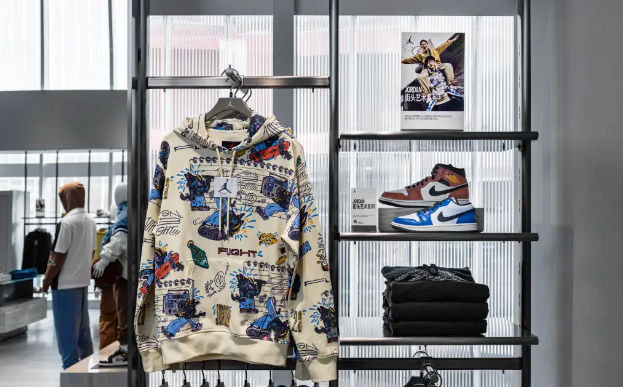
From Sprout to Soar: The Evolution of the Digital Printing Industry
The rise of digital printing itself is a subversion of traditional industries. Looking back to the 1990s, China's digital printing industry was still in its infancy. At that time, traditional printing and dyeing techniques dominated the market, requiring not only cumbersome plate making processes but also many pain points such as batch limitations, significant color differences, and severe pollution. A piece of fabric often goes through multiple rounds of trial production from design to finished product, consuming a lot of ink, time, and manpower. Small batch customization is also costly and difficult to achieve.
With the iteration of computer technology, digital printing has gradually emerged with its core advantages of "no need for plate making, on-demand printing, and rich colors", and has gone through a key process from technological exploration to large-scale application. In the second decade of the 21st century, the order model of "small batch, multiple batches, and fast response" in the textile market has become mainstream. The advantages of digital printing, such as not having to bear plate making costs and short order cycles, have become increasingly prominent, and the market size continues to expand. Data shows that the global market size of textile digital printing machines has reached 3.1 billion yuan in 2023, and it is expected to maintain a high-speed growth trend in 2029; The global digital inkjet printing production is expected to exceed 20 billion meters by 2026, and China, as the world's largest producer and consumer of textiles, is becoming the core engine of this industrial upgrading.
However, behind the rapid development, the digital printing industry still faces many bottlenecks, such as low yield rate of clean color fabric printing, dependence on senior technicians for color calibration, low efficiency of defect detection, and difficulty in accurately controlling resource consumption, which have become obstacles to the industry's move towards high-end and intelligent development. It was not until the cross-border entry of AI technology that these long-standing problems in the industry were finally met with breakthrough solutions.
Two way rush: AI injects hardcore energy into digital printing
If digital printing breaks the boundaries of traditional craftsmanship, then AI has added "intelligent wings" to digital printing, reconstructing the production logic and innovation ecology of the industry from design, production to quality control throughout the entire process. This combination is not a simple technological overlay, but a deep transformation from "experience driven" to "data-driven", and its advantages are becoming increasingly prominent in practice.
Precise breakthrough: Overcoming industry pain points, improving quality and efficiency
Printing with clean color fabric was once a major challenge in the digital printing industry - printing with a single color fabric requires extremely high color uniformity. In the past, manual operation or traditional machine vision inspection either had a yield rate of less than 50% or had to be passively shut down for maintenance, which not only affected efficiency but also increased costs. The practice of Qianyong Textile has provided a perfect answer: by introducing AI image and text processing technology, the printer can not only accurately "read" the color ratio, with the red proportion precise to 25.8% and the ink usage controlled to 205.1988 milliliters (four decimal places), but also has dynamic error correction capability - real-time detection of defects such as "wire drawing and white exposure" during the printing process, and automatic patching and repair, making the yield rate of clean color fabrics skyrocket to over 90%.
This is just a microcosm of AI empowerment. In terms of color management, AI algorithms can analyze ink characteristics, fabric ink absorption, and environmental temperature and humidity in real time, dynamically optimize output parameters, reduce color calibration time by more than 90%, and achieve color reproduction far beyond manual experience judgment; In defect detection, AI systems based on computer vision can identify micrometer level issues such as broken wires and smudges with an accuracy rate of over 99.5%, replacing the traditional mode of "left hand lighting, right hand whiteboard" for fabric inspectors. This not only reduces manual labor intensity but also avoids misjudgments caused by eye fatigue; In terms of equipment maintenance, AI monitors the vibration, temperature and other data of the print head to warn of the risk of faults in advance, improving the overall efficiency of the equipment by more than 30% and completely changing the passive situation of "repair after faults".
Creative liberation: Activate design boundaries and adapt to personalized needs
With the upgrading of consumption, personalized customization has become the core growth point of the digital printing market, and AI has bridged the last mile from demand to production. In the past, designers had to repeatedly adjust color schemes and optimize details to complete a printed pattern, which was time-consuming and laborious; Nowadays, with the help of generative AI, users only need to input text descriptions or simple sketches to automatically generate high-resolution printing patterns, which increases designer efficiency by 5-10 times, and creative inspiration is no longer limited by technological barriers.
In terminal application scenarios, the intervention of AI has made "customization as production" a reality. Through the C2M (User Direct Manufacturing) mode, consumers can upload a photo and a piece of text, and AI can automatically optimize the image resolution and match the color scheme of the fabric, completing the entire process from design to production delivery within 24 hours. At the same time, AI can simulate the printing effects of different materials such as silk, leather, cotton and linen, and combine AR/VR technology to allow customers to preview the finished product effect before placing an order, greatly reducing the decision-making cycle. Data shows that AI driven personalized customization business has achieved an annual growth rate of 67%, accounting for over 35% of the high-end textile printing market and becoming a new profit growth point in the industry.
Green Transformation: Optimizing Resource Consumption and Practicing Sustainable Development
In the context of the "dual carbon" goal, environmental protection has become a must answer question for the digital printing industry, and AI has become a key driver for green transformation. Traditional printing and dyeing processes have a large amount of wastewater discharge and high energy consumption, while digital printing itself already has environmental advantages, and the addition of AI further amplifies this advantage. By dynamically calculating ink usage, inkjet path, and drying energy consumption, AI can achieve a 20% -40% reduction in energy consumption per unit area, reducing resource waste from the source; AI can intelligently match compatible ink and printing solutions for recycled fabrics, promoting the implementation of "zero waste printing"; At the same time, the AI system integrates a global database of chemical regulations, automatically screening non-toxic and biodegradable ink formulas, allowing companies to easily avoid environmental compliance risks. Practice has proven that digital printing enterprises using AI optimization systems can reduce their carbon footprint by 28% and increase their profit margin by 12%, achieving a win-win situation for environmental protection and efficiency.
Future prospects: Technological integration brings more possibilities
The combination of digital printing and AI is still in the early stage of rapid development. With the deep penetration of technologies such as multimodal big models, the Internet of Things, and 5G, the industry will usher in a broader development space in the future, presenting three core trends.
Firstly, the entire process will be upgraded to a deep level of intelligence. In the future, AI will achieve full scene coverage of the digital printing industry chain, from raw material procurement, pattern design, production scheduling to logistics distribution and after-sales tracking, forming a closed-loop intelligent management. With the help of IoT technology, every printing device will become a data terminal. AI collects and analyzes real-time data from the entire process to achieve self optimization of production parameters, predictive maintenance of equipment, and intelligent scheduling of orders. It is expected that by 2030, intelligent printing can shorten production cycles by 50%, reduce scrap rates by 25%, and truly realize the large-scale application of "unmanned workshops".
Secondly, the cross-border integration of technology expands the application boundaries. The combination of digital printing and AI will further link emerging technologies such as 3D printing, smart wearables, and metaverse to develop more functional and innovative products. For example, by optimizing the 3D printing path through AI, batch production of conductive printing and temperature sensitive color changing fabrics can be achieved, which can be applied in fields such as smart clothing and medical equipment; By combining metaverse and AR technology, consumers can independently design clothing prints in virtual space and preview their upper body effects in real-time, creating a "personalized+immersive" consumption experience. At the same time, with the popularization of green technologies such as LED curing inkjet, AI will be deeply integrated with environmental protection technology, promoting the industry to achieve the sustainable development goal of "zero emissions and full circulation".
Thirdly, the coordinated development of globalization and localization. Under the wave of globalization, digital printing technology will accelerate its penetration into developing countries, and developed regions in the clothing industry such as Asia, Europe, and the Americas will gradually replace traditional printing and dyeing with digital printing, becoming the mainstream production method. Chinese companies will leverage their technological research and manufacturing advantages to further expand their global market share. It is expected that by 2028, Chinese companies' share in the high-end digital printing market will increase to 25%. At the same time, localization innovation will become the core competitiveness. Enterprises will combine regional consumption needs, accurately match market preferences through AI, launch more targeted products and services, and form a development pattern of "global technology+local innovation".
From the uniform fabrics of the Milan Winter Olympics to personalized clothing for daily wear, from exquisite patterns in home decoration to functional printing in the industrial field, the integration of digital printing and AI is quietly changing our lives and reshaping the entire industry ecosystem. This transformation not only makes production more efficient, quality more outstanding, and creativity more free, but also enables traditional manufacturing to find the core path of upgrading and transformation in the digital wave. In the future, when the "intelligent brain" of AI and the "precise hands" of digital printing further collaborate, we will surely see a new industrial landscape of infinite creativity, green efficiency, and intelligent convenience, making every inch of fabric a perfect carrier of technology and aesthetics.
The article material is sourced from the internet. If there is any infringement, please contact us
Contact Us
- Address:Room 904, Greenland Center, Financial City, No. 662 Huangpu Avenue Middle, Tianhe District, Guangzhou City
- Phone:020-89300178/89300188
- Email:gzboya@vip.163.com
email subscription
- Click to subscribe to email now (industry news, exhibitor updates, etc.)
- submit
- I want to visit | Be an exhibitor | Cloud exhibition | Events
Follow us