Analysis of the Size and Share of the Digital Textile Printing Market, Growth Trends and Forecast (2026-2033)
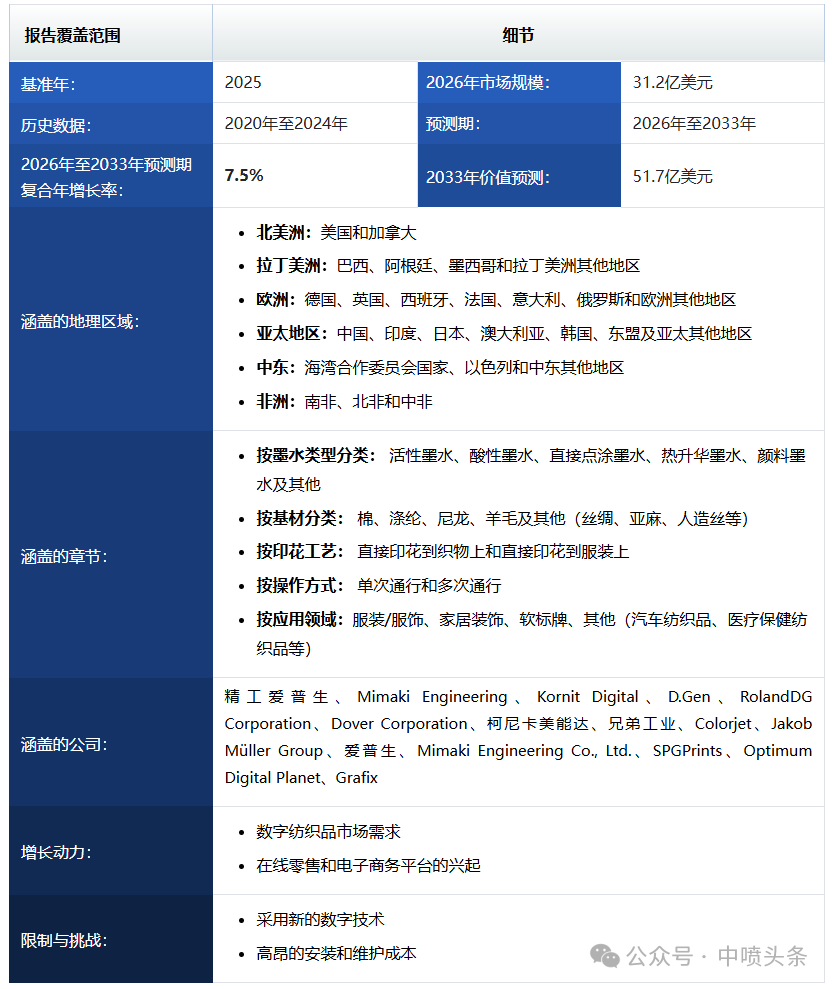
The digital textile printing market is divided by ink type (active ink acidic ink, direct spray ink, sublimation ink, pigment ink and others), substrate (cotton, polyester, nylon, wool and others), printing process (direct printing of fabrics and clothing), operation mode (single printing and multiple printing), application field (clothing/apparel, home decoration, soft signage and others), and region (North America, Latin America, Europe, Asia Pacific region, Middle East and Africa).
Scale and Trend of Digital Textile Printing MarketIt is expected that the global digital textile printing market share will reach 3.12 billion US dollars by 2026 and 5.17 billion US dollars by 2033, with a compound annual growth rate (CAGR) of 7.5% from 2026 to 2033.Divided by ink type, the sublimation ink market dominates, and due to the multifunctionality of sublimation dyes, it is expected to occupy 42.5% of the market share by 2026.Divided by substrate, cotton materials dominate the market and are expected to hold 42.7% of the market share by 2026, thanks to their natural affinity with various printing technologies.Divided by printing technology, due to its high operational efficiency, the direct clothing printing field dominates the market and is expected to occupy 42.73% of the market share by 2026. From an operational perspective, the multi-channel segmented market will occupy the highest market share in 2026, thanks to its cost-effectiveness and flexibility. According to the application field, the clothing/apparel sector is expected to occupy the largest share of the global digital textile printing market by 2026, mainly due to the fast customization of the fashion industry.From a regional perspective, it is expected that North America will lead the market and occupy 42.1% of the market share by 2026. The Asia Pacific region is expected to be the fastest-growing region during the forecast period.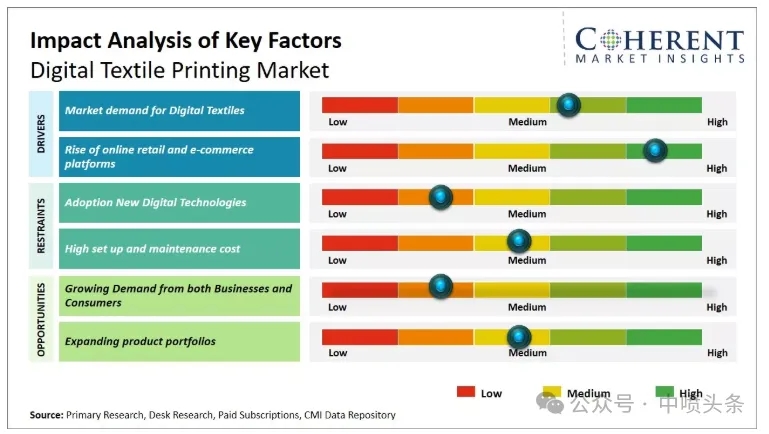
Due to the increasing demand for customized and personalized textile printing in various end-user industries, it is expected that the global digital textile printing market demand will significantly increase during the forecast period. Compared to traditional screen printing and analog printing, digital printing has many advantages, such as reducing waste, printing on demand, wide applicability, and shorter delivery cycles. Therefore, its increasingly widespread application is expected to drive the demand growth of the digital textile printing market. In addition, the expansion of the textile industry and the increasing demand for advanced textiles in the fashion and interior decoration industries are expected to drive the development of the digital textile printing market in the near future. However, the high capital investment and operating costs of digital printers may to some extent hinder market growth during the forecast period.Current events and their impact on the digital textile printing market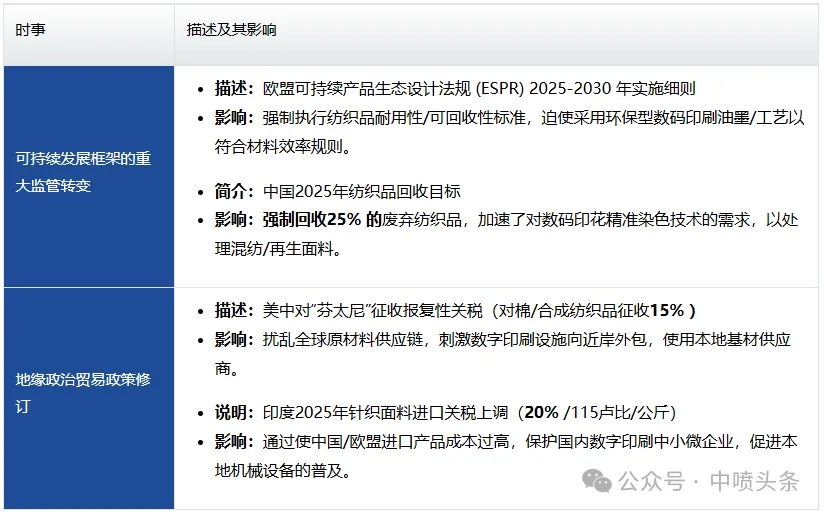
The role of artificial intelligence (AI) in the digital textile printing marketThe integration of artificial intelligence in the digital textile printing market is revolutionizing the digital printing industry, as it can automate tasks, improve efficiency, and achieve personalized printing experiences. Artificial intelligence tools can enhance text recognition capabilities, optimize printing workflows, and even create personalized printing products. These features include automatic image correction, recognition of handwritten text, and recommendation of optimal print settings.In May 2025, Kornit Digital launched the Apollo high-throughput direct spray clothing (DTG) printing system at the FESPA 2025 exhibition, aiming to connect traditional screen printing with digital on-demand production. The Apollo system has the characteristics of automation, integrated solidification, and single person operation process, and can produce up to 400 pieces of clothing per hour, supporting mass customization while reducing costs and waste.Insights into segmented markets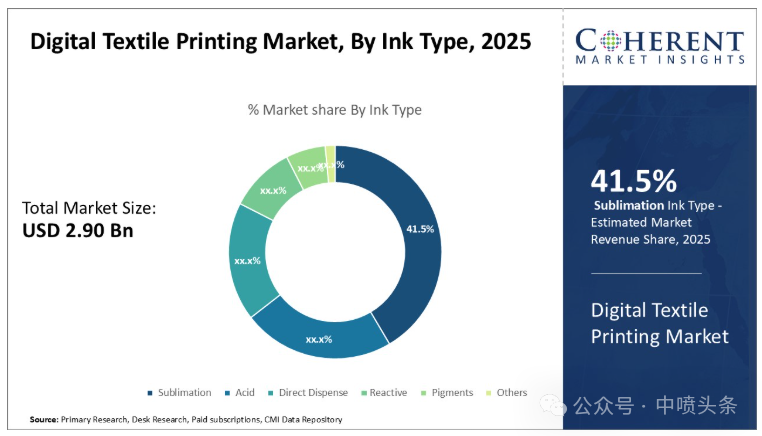
Insight into the Digital Textile Printing Market, Divided by Ink TypeSublimation process occupies the largest market shareIn terms of ink types, due to the multifunctionality of sublimation dyes, sublimation ink is expected to occupy 42.5% of the market share by 2026. Sublimation ink can present vivid colors and extremely high color saturation, thanks to the characteristics of sublimation dyes. These dyes can be converted from solid to gas without going through a liquid state after heating, thus deeply embedding the color into the fabric fibers. This ensures long-lasting and vibrant colors, as well as resistance to washing and friction. Compared to other types of ink, the wide variety of sublimation dyes also provides greater creativity and customization space for printers. The new progress in dye chemistry is further expanding the color gamut. Sublimation ink is also very suitable for printing on the most commonly used polyester and blended fabrics in clothing, as these dyes bind well with these materials.Sun Chemical Company has launched ENvaJet Topaz SC, a cutting-edge sublimation ink designed specifically for digital textile production. This ink is specifically designed for Kyocera print heads, with a wider operating window for precise spraying and enhanced cross system compatibility.
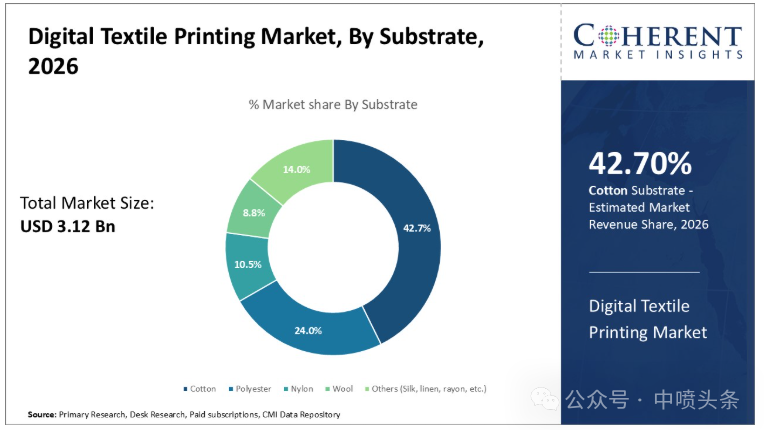
Insight into the Digital Textile Printing Market (Divided by Substrate)Cotton holds the largest market shareIn terms of substrates, cotton fabric holds a 42.7% market share due to its natural affinity with various printing techniques. As a natural fiber, cotton fabric has an inherent porosity that allows it to absorb ink and dyes, thereby improving color saturation and printing effects. The advancement of ink and pre-treatment formulas has further optimized the printing effect of cotton fabric. The breathability and skin friendliness of cotton fabric have also consolidated its popular position in the clothing industry. Due to consumers' preference for the comfort of cotton fabric, a significant portion of the clothing market still relies on cotton fabric. Therefore, cotton fabric can achieve high-quality and brightly colored printing and remains a highly valuable substrate.In February 2025, Premier Digital Textiles launched a new type of recycled cotton fabric as its updated version; Part of the Essentials series. This series includes 31 sustainable substrates designed specifically for digital textile printing. The Essentials series also includes organic cotton and recycled polyester, aimed at supporting an environmentally friendly textile supply chain and reducing environmental impact by reusing recycled fibers in clothing and furniture.Insight into the Digital Textile Printing Market, Divided by Printing TechniquesThe clothing direct printing field dominates the market shareIn terms of printing technology, direct spray printing, with its efficient operational efficiency, occupies 42.73% of the market share. Direct spray printing eliminates the intermediate steps between fabric printing and clothing manufacturing, allowing customized patterns to be directly printed onto finished or semi-finished clothing. Compared with traditional transfer printing methods, this integrated process is faster and more cost-effective. It can achieve on-demand printing and minimize fabric waste. The direct contact between ink and fabric also brings better color fastness. The emergence of multi needle inkjet printers capable of printing complex clothing contours has further promoted the popularity of direct printing. The D2G tray kit simplifies workflow, reduces waste, and promotes customized production, marking an important step towards scalable and environmentally friendly development in the fashion industry.In April 2024, Stratasys launched a new "Direct Ready to Wear Printing" (D2G) feature for its J850 TechStyle 3D printer, which allows for full-color, multi material 3D printing directly on assembled clothing such as denim, cotton, polyester, and linen. The company showcased the Urban Tatto0 series at the TeXprocess exhibition in Frankfurt - a collection custom designed by renowned designers that perfectly embodies the seamless integration of personalization and sustainability in the fashion industry.Insight into the Digital Textile Printing Market (Divided by Operation Mode)Multi channel segmentation to gain maximum market shareIn terms of operation, due to its cost-effectiveness and flexibility, it is expected that by 2026, multi pass printing technology will occupy the largest share of the digital textile printing market. The multi pass printing process is considered a globally leading technology. In addition to cost-effectiveness and flexibility, the multi pass printing process can also correct printing errors during multiple printing processes, making it an ideal choice for various applications ranging from fashion to home decor. Multi pass printing process is a digital printing process where the print head scans multiple times in the same area of the substrate to construct the final image. Multi pass printing is commonly used to improve print quality, especially in handling finer details and smoother color gradients.In February 2025, Indian printing technology company Monotech Systems unveiled PixelGlow Vertex at the PrintPack 2025 exhibition, a fully automatic B2 format multi-channel digital UV hot stamping and decoration system. The system aims to create high gloss protrusions and metallic texture effects, using Ricoh print heads that support 170-600 grams per square meter of paper and can process up to 300 A3+papers per hour. Its built-in A-drive scanner ensures precise registration and is equipped with a gold foil saving mechanism to reduce operating costs.Insight into the Digital Textile Printing Market (Divided by Application Fields)Clothing/accessories dominateIn terms of application areas, driven by the fashion industry's demand for rapid customization, small batch production, and sustainability, it is expected that by 2026, the clothing/accessories sector will occupy the largest market share. In the fashion industry, digital textile and clothing printing technology optimizes production by achieving rapid design iteration and reducing waste, especially in the fields of e-commerce and fast fashion. Digital textile printing technology is becoming increasingly popular in the clothing industry due to its versatility, speed, and customization options, while also providing a more sustainable solution compared to traditional methods.In February 2025, Coloret India Ltd launched the groundbreaking digital textile printer Fab Jet Pro, designed specifically for mass production. This new model has a daily processing capacity of up to 13000 square meters, supports 8-color configuration, and a printing speed of up to 654 square meters per hour. It is an ideal choice for applications such as home textiles, clothing, and soft signage. FabJet PrO uses Kyocera and Konica Minolta industrial grade print heads, emphasizing precision, versatility for wide width printing, and environmental friendliness.
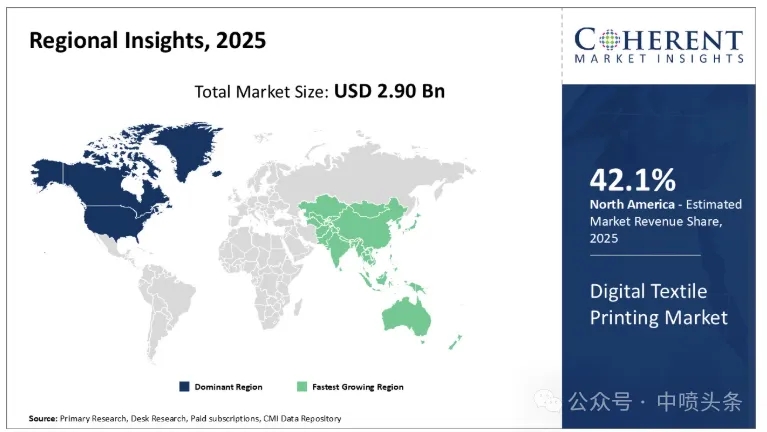
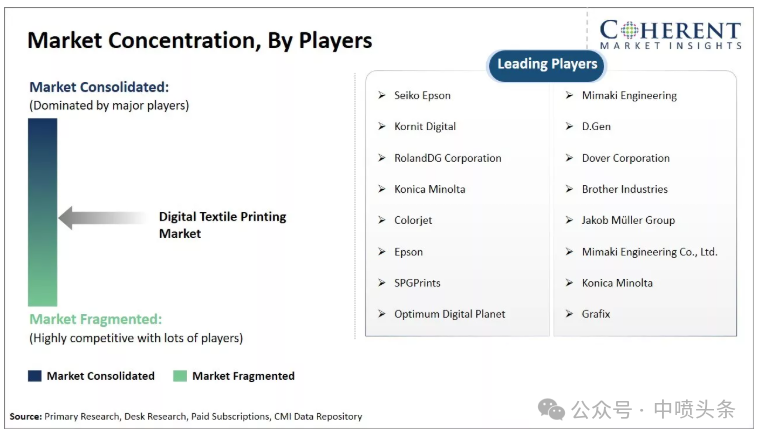
Analysis and Trends of the North American Digital Textile Printing MarketNorth America has established its dominant position in the global digital textile printing market and is expected to occupy 42.1% of the market share by 2026. The latest research on the digital textile printing market shows that the United States and Canada have numerous leading manufacturers and technology suppliers, which has enabled the region to accumulate strong expertise in this field. Major brands have set up production and research and development centers in North America in order to obtain the latest innovative achievements as soon as possible. Therefore, textile printers developed specifically for the North American market are often the most advanced in the world, with the highest level of functionality and performance. With the growth of demand for on-demand printing driven by e-commerce and fast fashion, North American companies are maintaining a leading position in innovation and market trends by utilizing IoT print heads and artificial intelligence color management technology. This further promotes the demand in the digital textile printing market.In April 2024, Epson showcased its SureColorF series products at ASEAN Fashion Week, with a focus on showcasing sustainable material technologies developed in North America.Analysis and Trends of the Digital Textile Printing Market in the Asia Pacific RegionThe Asia Pacific region has become the fastest-growing market for digital textile printing worldwide. The region has the world's largest textile production base, which means it will benefit greatly from this technology. Countries such as India and China are actively promoting the application of digital printing technology to improve the production efficiency and turnover speed of their export-oriented industries. Local governments provide subsidies and incentives to encourage printing companies to upgrade their equipment and build new printing factories.For example, in April 2026, Vee Kay Enterprises, headquartered in India, launched a high-speed "Made in India" digital textile printing machine using Ricoh's sixth generation printhead, demonstrating regional innovation capabilities. This is consistent with the broader forecast of the digital textile printing market, which predicts that the Asia Pacific region will maintain strong growth momentum in the next decade.Outlook for Digital Textile Printing Markets in Various CountriesTrends in the US Digital Textile Printing MarketThe development of the digital textile printing market in the United States is driven by its flexibility, customized options, and environmental advantages. The digital textile printing technology in the United States can print complex patterns on demand, achieve fast delivery, and create personalized products, while also reducing waste and water consumption compared to traditional methods. For example, in January 2024, Epson USA expanded its SureColorF series product line and launched a multifunctional direct spray clothing (DTG) printer tailored for artisans and small business users.Trends in China's digital textile printing marketIn recent years, the digital textile printing market in China has shown significant growth, mainly due to China's ability to quickly and efficiently produce customized, high-quality designs, which is in line with China's vast textile manufacturing industry and the growing demand for personalized and sustainable products from consumers. This technology can also reduce waste, minimize water usage, and enable flexible small-scale production, making it an ideal choice for manufacturers and consumers. Digital textile printing technology is rapidly gaining a foothold in the Yangtze River Delta region, the center of textile production and export in China. For example, at the International Textile and Apparel Exhibition 2024 (ITCPE 2024) held from May 20th to 22nd, exhibitors showcased cutting-edge digital textile printing equipment to meet the growing global demand. A recent report released by IDC shows that the revenue of digital textile printing equipment in China exceeded 66 million US dollars in the third quarter of 2023, a year-on-year increase of 17.2%. This further drives the growth of the digital textile printing market share.Trends in the Italian Digital Textile Printing MarketItaly has always been an important market for digital textile printing in Europe, mainly due to its ability to meet the demands of the luxury fashion industry for high quality, customized design, and faster delivery cycles. The mature textile production industry in the region has actively embraced digital technology to maintain competitiveness and provide sustainable production solutions. The Como region in northern Italy is renowned worldwide for its high-quality silk prints, leading the development of the Italian market and benefiting from it. For example, in March 2024, Dover Industries Italy unveiled its latest digital printing innovation product at the FESPA Global Printing Expo, highlighting its brand new Color Pack calibration software and a complete soft label solution. This integrated solution includes a high-speed P4 Evo 3.2 printer, Kian Digital K-ONE sublimation ink, and Color Pack software, aimed at improving color accuracy, ink efficiency, and production efficiency in the paper and non elastic fabric markets.Driving factors of digital textile printing marketMarket demand for digital textilesIn recent years, the demand for digital textiles has continued to grow. The emergence of digital printing technology has made it possible to print textiles in small batches on demand, thereby achieving personalization and customization of textiles. This has opened up new opportunities for small-scale printing, which was previously unattainable in traditional textile printing methods. Nowadays, consumers hope that clothing and household items can reflect their personal taste and personality. Digital textile printing technology precisely meets this demand, as it can print various designs on demand and can be produced in small batches as needed. Clothing manufacturers and textile retailers quickly realized the enormous potential of digital printing technology in meeting this demand. These manufacturers have started offering a variety of fashionable products using digital printing technology, featuring unique and eye-catching patterns and graphics. This has caught the attention of consumers and prompted them to favor digital printed textiles more. The attractiveness of customized exclusive textiles based on personal taste and interests is the main factor driving the growth of demand for digital textile printing technology.Market concentration and competitive landscape
In April 2025, Vee Kay Enterprises, a pioneer in India's digital printing industry, launched a new "Made in India" digital textile printing machine designed specifically for high-speed full-color production of knitted and woven fabrics. This new model is equipped with Ricoh's sixth generation print head, which can provide a production capacity of approximately 130-140 square meters per hour and support multiple color options, designed to meet the growing demand of the Indian textile and apparel industry. In February 2025, Mimaki Engineering Co. launched the Tx330-1800 and Tx330-1800B, its latest direct textile inkjet printers that minimize water usage during fabric printing. These two models only require printing and heat treatment, without the need for dyeing chemicals or wastewater treatment facilities, thus solving the environmental problems caused by traditional textile processes.In July 2024, digital textile printing expert Orange 0 Tec Pvt Ltd will launch its fully self-developed Fabpro 1i printing machine at the Gartex exhibition in New Delhi on August 1st. This "Made in India" model adopts Ricoh's eight nozzle system, occupies a small area, has a daily output of up to 2200 meters, and promises to provide excellent quality and efficiency. Fabpro1i is fully developed in India, reflecting the company's transformation from an importer to a manufacturer, and providing a complete digital textile printing ecosystem that includes ink, software, and professional support. In June 2023, Chinese textile hardware innovation enterprise Atexco unveiled its new VEGA9180DI intelligent digital textile printer at the ITMA2023 exhibition in Milan. This printer is designed specifically for industrial scale applications, with a daily printing capacity of up to 15000 meters, and is equipped with advanced systems including quadruple print head protection, temperature control, water-saving belt cleaning, and automatic centering feeding.In May 2022, Seiko Epson launched the Monna Lisa 8000 printer, a direct spray fabric printer designed specifically for the North American market. After acquiring For. Tex and F.lRobustelli, Epson was able to control the entire textile printing process, from raw materials to finished products, thereby consolidating its position in the North American market. In August 2022, Roland DG Corporation, a manufacturer and distributor of advertising and signage printers and 3D manufacturing tools, announced that it will build a new building at its factory located in Samurakul Province, Thailand (managed by Roland Digital Group Thailand Ltd) to expand its services.Coverage of Digital Textile Printing Market Report
The rise of online retail and e-commerce platformsThe increasing popularity of online retail and e-commerce is expected to drive market growth. In the digital age, online retail channels have spread across various industries, including textiles and clothing. Consumers are increasingly turning to e-commerce websites and brand websites to purchase fashionable clothing and home goods. For manufacturers and retailers serving this lucrative online retail market, digital printing provides a highly advantageous production method. It can achieve on-demand printing of various designs without the long preparation time and high minimum order quantity required by traditional textile printing methods. This enables e-commerce companies to more easily offer a wide variety of unique printed textiles that are constantly restocked on their websites, and keep up with rapidly changing consumer demands and trends.Digital textile printing technology is highly suitable for small-scale production of clothing, furniture, and other products with personalized or limited edition prints, thereby maintaining customer attention on e-commerce platforms. The synergistic effect of digital textile printing technology and online retail channels is driving the rapid popularization of this technology to meet the constantly evolving needs of digital commerce.Opportunities in the digital textile printing marketThe demand of enterprises and consumers continues to growOn demand printing technology reduces the minimum order quantity and provides greater design flexibility. This personalized and customized ability of textiles can efficiently meet the growing needs of enterprises and consumers. With the advancement of technology, digital printing will be able to replicate more complex designs and patterns on a wider range of fabrics. Compared with traditional methods, it also has the advantages of reducing textile waste and being more environmentally friendly.Analyst opinion (expert opinion)The market value of digital textile printing (DTP) no longer relies on gradual changes, but is undergoing a structural transformation driven by factors such as technological integration, sustainable development requirements, and production localization. The view that digital printing is only a "faster alternative" to analog technology is outdated; In fact, it redefines the entire value chain of the textile manufacturing industry.
In the fields of fast fashion and small batch production, digitization has become the default choice. Like Zara and H& M, a company with a tight operating cycle, has shifted a considerable portion of its production processes to digital platforms, thereby shortening the delivery cycle from 6-9 weeks to less than 7 days. Brands are no longer willing to stockpile inventory with uncertain demand. Digital textile printing, especially printing using pigment ink, can achieve same day sampling and almost instant design iteration - making the long preparation time of traditional printing completely outdated in this field.
The shift from dye sublimation and reactive ink to pigment ink is not an insignificant chemical debate, but a sign of market maturity. According to data released by Kornit Digital and EFI Reggiani, pigment based digital printing eliminates pre-processing and post-processing steps, reducing water usage by up to 95% and energy consumption by 60%. This makes pigment ink not only a form of; Green "; An alternative solution, and also the only viable option for decentralized micro factory production in the West.Article reposted from: Middle nozzle stripReport source: CHERRENT MARKETINGHTS